
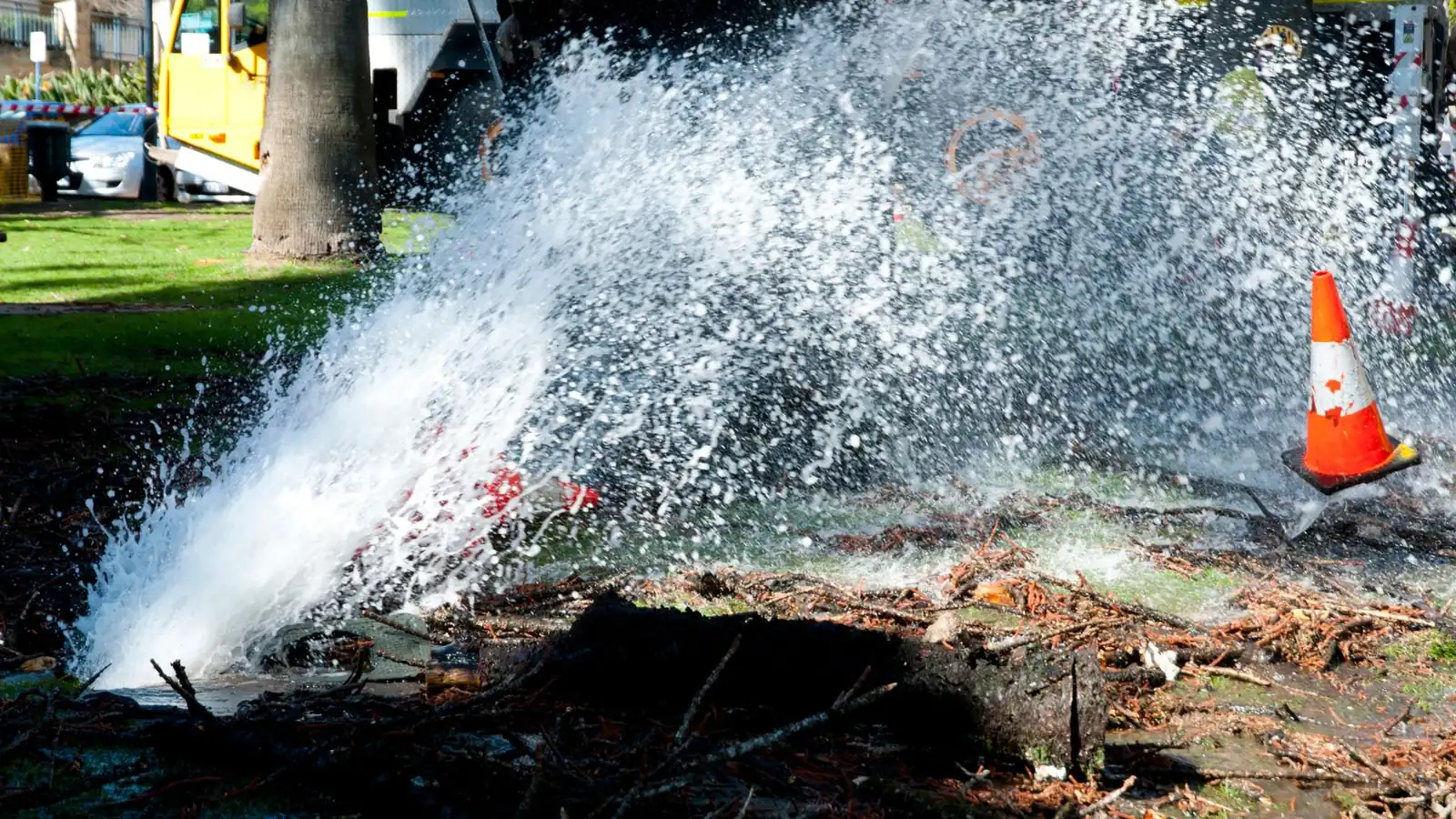
If a pipe has burst, do this first
A burst pipe is an emergency at any hour, and our line answers 24/7. Find the main water shutoff, usually where the supply line enters the basement or utility room near the meter, and turn it fully off. Then open one low faucet to drain the lines and relieve pressure.
Next, protect people. If water is falling through a light fixture or reaching outlets, leave that circuit off and stay out of the room. Move valuables up and away from the wet area, photograph everything, and call us. A plumber stops the leak at the pipe, and we handle what the water did to the house.
- Main shutoff: turn clockwise until it stops, or quarter turn on a ball valve.
- Open a lower faucet to drain the remaining water in the lines.
- Turn off the water heater if the broken line feeds it.
- Call a plumber for the repair and us for the water.
Why burst pipes cause so much damage so fast
A supply line runs at household pressure, and a split can pour out far more than a slow drip. Water follows framing, runs down inside wall cavities and soaks insulation and the ceiling below. By the time stains show, the wet area is usually much bigger than the visible spot.
The damage map matters. We trace the wetness with moisture meters and thermal imaging, then open only what needs opening. Wet insulation and soaked drywall near the break usually come out, while framing, subfloor and sound drywall farther away can often be dried in place with structural drying.
Where bursts tend to happen in Roselle homes
The village population nearly tripled between 1970 and 1980, rising from 6,207 to 17,034 by the Census count. Homes from that building boom often still have original copper supply lines with soldered fittings, and plumbing that old can fail at joints and old repairs. We cannot predict a failure, but a visible green crust, damp drywall or a hissing sound inside a wall deserves a plumber before it deserves a repair.
Village water comes from Lake Michigan through the DuPage Water Commission and is distributed by the Village system. If the line that failed is in the yard or on the street side of your meter, call the Village Public Works department too. For pipes that failed because of cold weather, see frozen pipe water damage.
What a burst pipe job usually involves
Shutoff and safety check
Confirm the water is off and that no electrical hazard exists in the wet area.
Extraction
Remove standing water from floors and carpet with pumps and wet vacuums.
Moisture mapping
Meters and thermal imaging find wet cavities behind walls and under floors.
Selective removal and drying
Wet insulation and soaked drywall come out. Air movers and dehumidifiers dry the rest.
Repair
Drywall, paint, flooring and cabinets are repaired once readings are normal.
Cost factors and insurance
Price depends on how long the water ran, how many rooms it reached, whether it hit carpet, hardwood or a finished basement, and how many days of drying are needed. A leak in a kitchen cabinet is a different job from a ceiling collapse. See kitchen water damage if cabinets took the water.
A sudden pipe burst is the kind of loss many homeowner policies are written to cover, though gradual leaks often are not. Check your policy and ask your insurer, and document before cleanup. Want your real number? Call (630) 580-6401.
What the standards say about a burst pipe
The published ANSI/IICRC S500 standard treats supply line water as clean at the start. It also warns that clean water can become contaminated if it sits, which is why speed matters. A plumber repairs the pipe, and drying follows.
Questions about burst pipe water damage in Roselle
Yes. Pipes do not burst on business hours, and the line is open all night and on weekends. Close the main first, then call and we will tell you what to do while the crew gets ready.
A licensed plumber repairs the pipe. We remove the water, dry the structure and repair what the water damaged. Coordinating the two saves time.
It varies with how much water reached the structure. Many jobs take several days of equipment running, and moisture readings, not the calendar, decide when drying is done.
Not always. Wet insulation and badly soaked drywall near the break usually come out, but drywall that is only damp can often be dried in place.
Shut the main as soon as you get in, do not walk through standing water near outlets, and call us. Photograph the damage before anything is moved and tell your insurer how long the leak may have run.
Sudden and accidental pipe breaks are often covered, and slow leaks often are not. Policies differ, so read yours and ask your insurer.