
Hot spot, running sound, high bill: the symptoms
Most people never say the words slab leak. They say the floor has a warm spot, the water meter keeps moving with everything off, a bill jumped or they hear water running when nothing is on. Those are the classic signs of a break in a supply line under or inside the slab.
Other signs include damp carpet or flooring with no visible source, a musty smell along a wall base, cracking or lifting of tile, and a sudden drop in water pressure. If you see water coming up through the floor or around the baseboards, shut the main water valve and call. A plumber confirms and repairs the pipe, and we handle the wet structure.
- Check the meter: turn everything off and watch for movement.
- Feel the floor for warm patches, especially hot water lines.
- Listen for running water in quiet rooms.
- If water is visible, shut the main and call the 24/7 line.
Is a slab leak an emergency?
If water is rising through the floor, yes, and our line answers 24/7. If you only suspect a leak, it is urgent but not always an hour-by-hour emergency. Either way, a hidden leak under a slab can run for a long time and soak flooring, subfloor and wall bottoms before anyone notices.
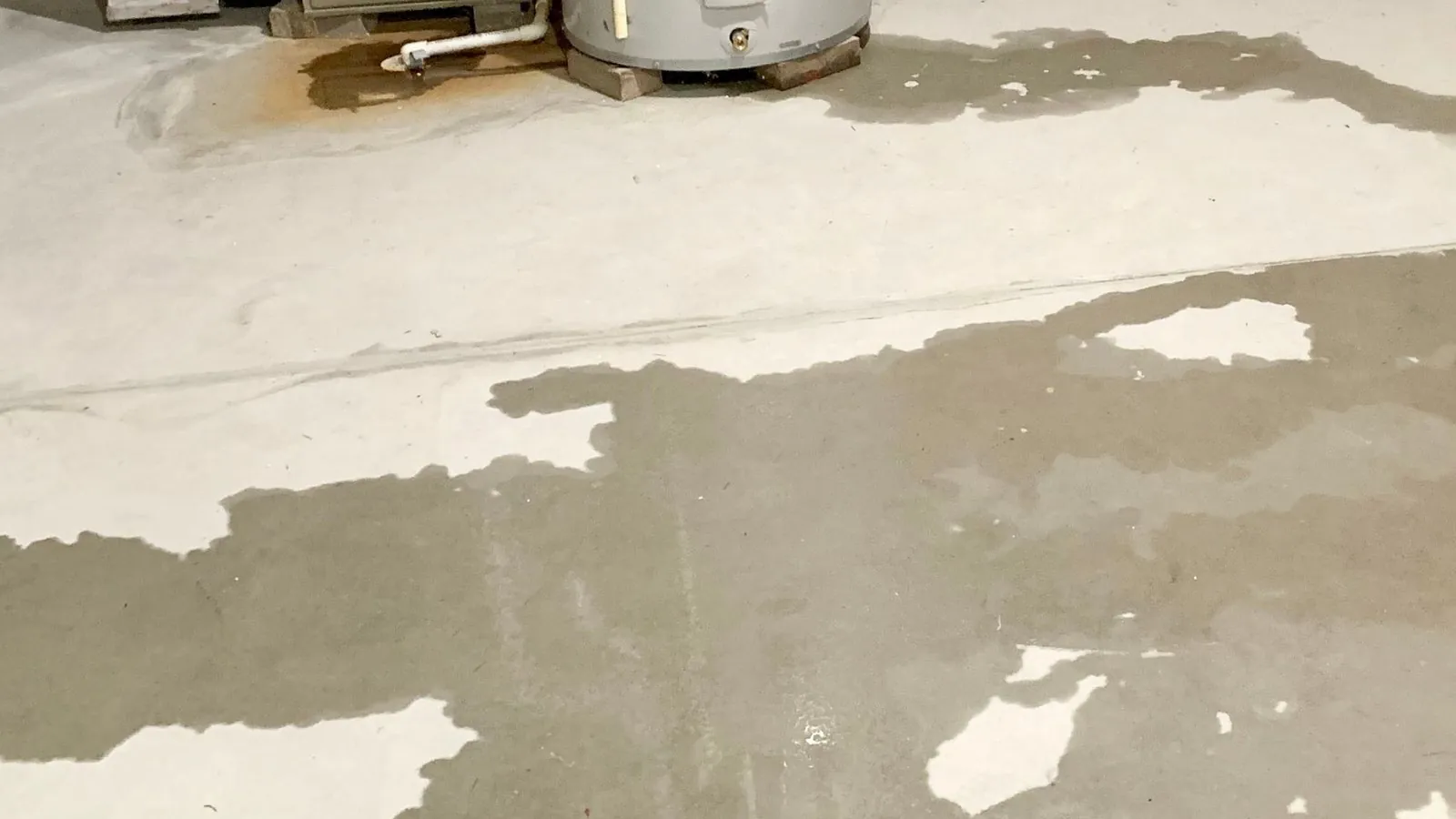
Many northern Illinois homes have basements, so true slab-on-grade floors are the exception here. They still exist in additions, some townhomes, garages and utility rooms. If your home has a basement with a concrete floor, a leak in that floor is a related problem, and our basement water damage page covers it.
What happens after the leak is found
Locate
A plumber uses leak detection to find the break before anything is opened.
Repair
The pipe is repaired or rerouted. This is plumbing work, not ours.
Extraction and moisture mapping
We remove surface water and map wet flooring, wall bases and subfloor.
Drying
Air movers and dehumidifiers dry the flooring and structure, with readings to confirm.
Restoration
Flooring, baseboards and drywall are replaced where drying was not possible.
A concrete slab holds water for a long time. Drying is slower than a wet carpet because the slab itself stores moisture and releases it into flooring above. That is why moisture readings matter before anyone installs new flooring. See structural drying and dehumidification for the equipment and method.
Flooring and what to expect
| Floor type | Effect of a slab leak | Usual outcome |
|---|---|---|
| Carpet and pad. | Wicks water, can mold. | Often removed and replaced. |
| Hardwood or laminate. | Cups, buckles or separates. | Sometimes dried, often replaced. See hardwood floor repair. |
| Tile. | Grout and subfloor stay wet. | Tile may lift. Moisture must be checked before replacing. |
Cost and insurance
Price depends on how long water ran, which floors and rooms were reached, whether flooring must be replaced and how long drying takes. Leak detection and pipe repair are separate plumbing costs. Sudden pipe breaks may be covered by homeowner policies, while long-term seepage often is not. Ask your insurer. Want your real number? Call (630) 580-6401.
What to do if you suspect a slab leak
- Shut off the main and watch the meter for movement.
- Walk barefoot for warm spots on the floor and note them.
- Listen at floors and walls for running water when everything is off.
- Photograph stains, cracks or lifting flooring.
- Call a plumber for leak detection, then call us to dry.
ANSI/IICRC S500 lists concrete among dense materials that dry slowly. A slab can stay damp long after the leak stops, which is why readings matter more than a calendar.
Questions about slab leak water damage in Roselle
Yes. If water is coming up through the floor, shut the main and call, whatever the hour. For a hidden leak with no active flooding, a call in the morning still works.
Watch for warm floor spots, running water sounds, a moving water meter with everything off, damp flooring and a sudden jump in your bill. A plumber confirms with leak detection.
No. A plumber locates and repairs the pipe. We dry and restore the structure around it.
No figure is available for the village. Many homes here have basements instead of slab floors, so true slab leaks are not typical, but they occur in slab additions, garages and some townhomes.
It varies with the amount of water and the slab. We use moisture meter readings, not a set number of days, to decide when flooring is safe to install.
Often the resulting water damage is covered when the break is sudden, and the cost of reaching the pipe may be treated differently. Policies vary, so ask your insurer.