
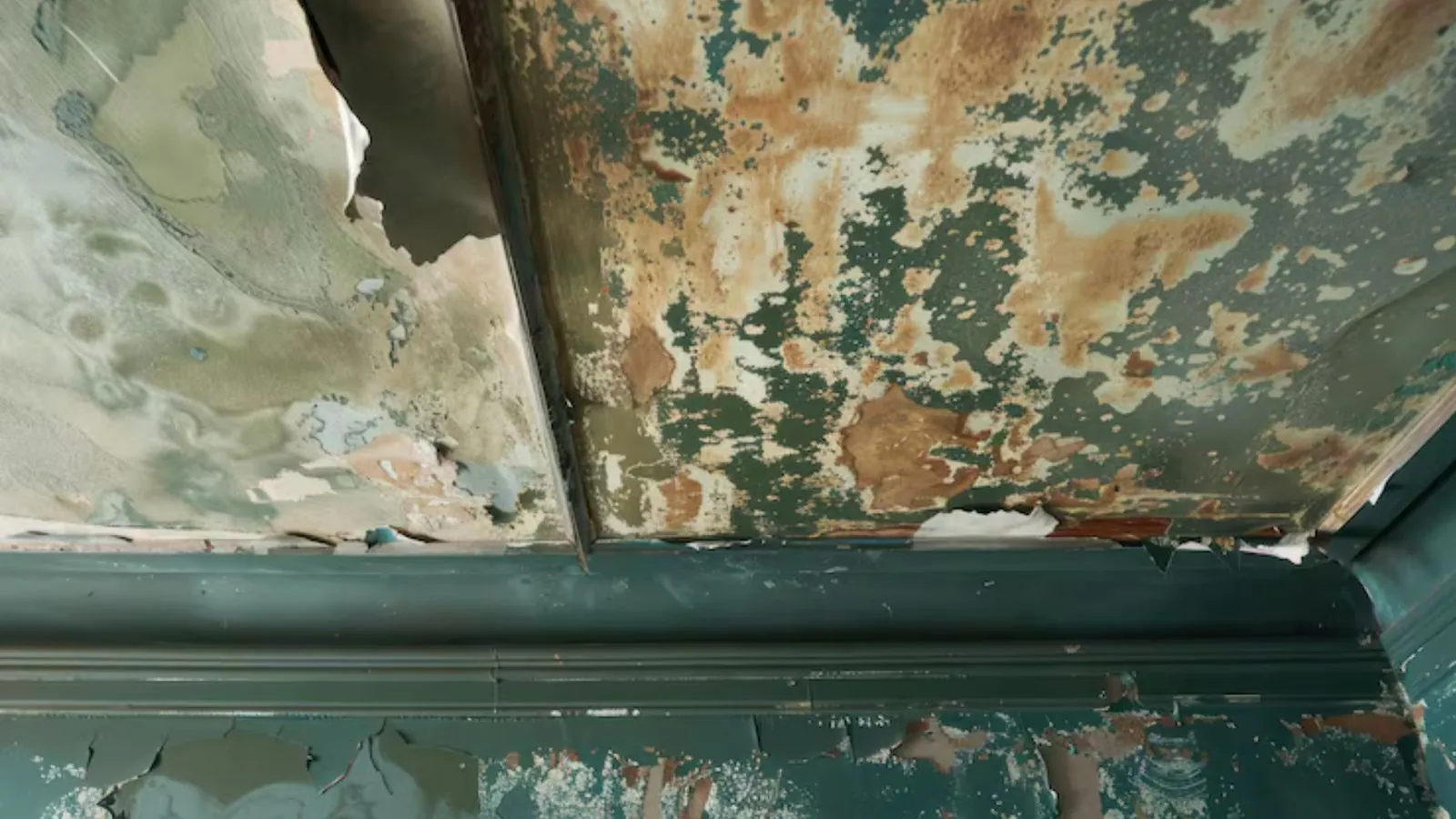
Wet baseboards, bubbling paint and soft drywall
Drywall is gypsum between paper, and it absorbs water through the paper and the cut edges. It can wick water several inches above the visible wet line. People search for water damage on baseboards, sheetrock repair and wall stains because those are the first things they see, but the real damage is often inside the wall.
Look for paint that bubbles or peels, a baseboard that swells or separates, a soft spot when pressed, stains that spread, and a musty smell near the wall. A moisture meter and thermal camera find the wet area behind the surface, and that map decides what stays and what comes out.
- Paint bubbles, peels or flakes near a wall base.
- Baseboards that swell, warp or pull away.
- Soft, crumbling or discolored drywall.
- Stains that darken after rain or when a fixture is used.
Dry in place or cut it out?
Clean water that is caught quickly often lets us dry drywall in place with air movers, dehumidifiers and small holes drilled for airflow. When drywall is soaked for a long time, crumbling, or touched by contaminated water, it is cut out. A common method is a flood cut, a straight cut a couple of feet above the wet line, with the section removed and the cavity dried.
| Condition | Usual decision | Why |
|---|---|---|
| Slightly damp, intact, clean water. | Dry in place. | Quick drying avoids replacement. |
| Soaked, soft or crumbling. | Cut out. | Lost strength, holds moisture. |
| Contaminated water. | Cut out. | Cannot be reliably cleaned. |
| Wet insulation behind. | Insulation removed. | Holds water against framing. |
ANSI/IICRC S500 is the published water damage restoration standard that guides this reasoning, and you can ask any company if its crews work to it. After cutting, the framing is dried, checked with a meter and the wall is rebuilt: new drywall, tape and finish, texture and paint.
Where wall water comes from
Walls get wet from supply and drain lines, shower and tub leaks, roof and window leaks, appliance leaks and flooding. Each source has its own page: see burst pipe water damage for supply failures, storm water damage for rain through the building envelope and ceiling water damage repair when the damage is overhead.
If a wall has been wet for a long time and shows dark spots, our mold remediation page covers testing and removal. We do not make health claims, and health questions belong to a physician.
Roselle homes and permits
In Roselle, the village Development and Engineering Services office handles building permits and lists electrical and plumbing work, water heater replacement, roof replacement and kitchen or bath remodels among the work that needs one. Its permit page does not mention drywall repair, so ask whether your project, especially one that opens a wall with wiring or pipes, needs a permit.
Cost factors and insurance
Price depends on how much wall is affected, whether insulation and drywall are replaced, the finish level and the drying days needed. Sudden leaks are often covered by homeowner policies, and neglected leaks often are not. Ask your insurer and keep photos. Want your real number? Call (630) 580-6401.
What to do about a wet wall today
- Turn off the water source behind or above the wall.
- Pull furniture away and lift items from the baseboard.
- Do not poke holes in the wall unless a pro advises it.
- Keep the room ventilated, not heated.
- Mark the edge of any stain with a pencil and the date.
Marking the stain gives you a simple way to see whether the wall is still wetting. If the line moves, call right away.
Questions about wall and drywall water damage in Roselle
Sometimes. Clean water that is dried quickly can often be dried in place. Soaked, crumbling or contaminated drywall is usually cut out.
A straight cut made above the wet line in drywall so the wet section and insulation can be removed and the wall cavity dried.
Look for bubbling paint, swollen baseboards, soft spots and a musty smell. A moisture meter or thermal camera confirms it.
No. Paint hides the stain but not the moisture. Dry the wall first and fix the source.
Roselle lists several types of work that need a permit, but its permit page does not mention drywall. Ask Development and Engineering Services before opening walls with wiring or pipes.
Sudden leaks are often covered, and slow leaks often are not. Ask your insurer before repairs start.