
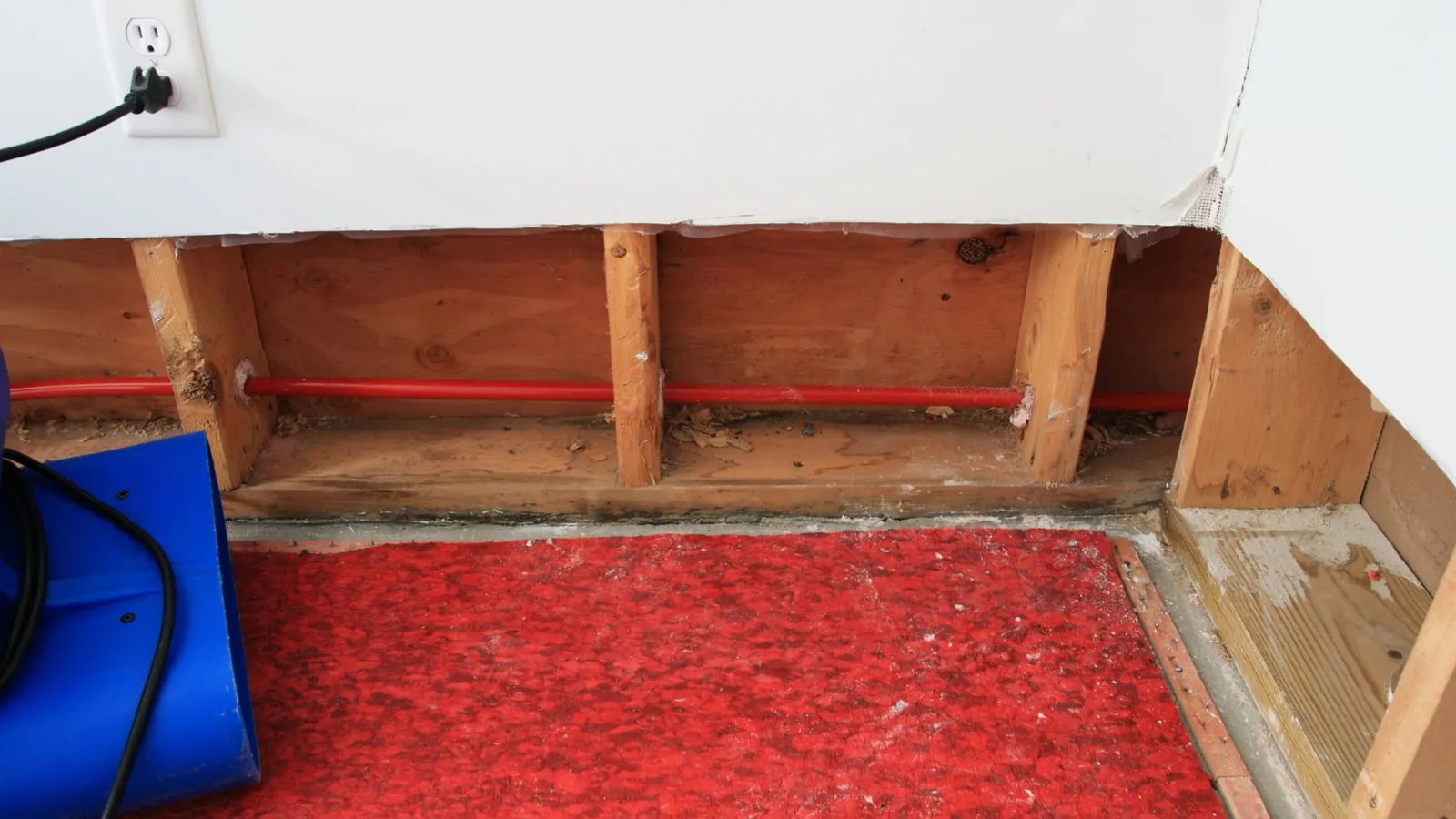
Can wet carpet be saved?
It depends on the water. Clean water from a supply line that is dried quickly can often be saved, with carpet lifted and pad dried or replaced. Water from a washing machine drain or dishwasher is dirtier. Flood water and sewage make carpet and pad a removal job, because porous materials soaked by contaminated water cannot be reliably cleaned.
The longer carpet stays wet, the worse the odds. Moisture sinks into the pad, the tack strip and the subfloor, and mold can start. If carpet is soaked, extract surface water, move furniture and call us. Do not walk on it, and do not use a standard household vacuum on wet carpet.
- Extract standing water first with a wet vacuum if safe.
- Lift furniture and put foil or blocks under the legs.
- Take photos before anything is removed.
- Do not run heating above a normal setting to speed drying.
The pad, the tack strip and the subfloor
Most carpet loss decisions are about the pad, not the carpet. Foam or rebond pad holds water like a sponge, and drying it in place can be slow. In many cases we lift the carpet, remove the pad, dry the subfloor and reinstall the carpet over new pad if the carpet itself is in good shape.
| Water source | Typical carpet outcome | Pad outcome |
|---|---|---|
| Clean supply line leak. | Often dried and reinstalled. | Often replaced. |
| Appliance overflow. | Cleaned and dried if caught fast. | Replaced. |
| Flood or sewage. | Removed. | Removed. |
| Roof or ceiling leak. | Depends on contaminants. | Often replaced. |
Industry guidance on these distinctions is found in ANSI/IICRC S500, the published water damage restoration standard. A moisture meter checks the subfloor too, since a dry top and wet subfloor can bring mold and odor back. See structural drying for the equipment.
Wet carpet and mold
Mold needs moisture and an organic food source, and carpet pad and dust provide both. Many people lift a corner of carpet and find a dark spot. We do not make health claims about mold, and a physician handles any health question. If growth is visible, see mold remediation for testing and removal under ANSI/IICRC S520.
If the carpet is over a finished basement floor, see basement water damage cleanup. If the leak came from a ceiling above, see ceiling water damage repair.
Replacing carpet after water damage in Roselle
Carpet in Roselle homes from the 1960s and 1970s growth era may still sit over older padding and, sometimes, hardwood. If you plan to replace it, ask your installer to check the subfloor. Any structural repair that follows water damage may need a permit from Development and Engineering Services, so ask before work starts.
Cost factors and insurance
Price depends on the area, how long the carpet was wet, whether pad is replaced, the water category and the drying equipment. Sudden leaks are often covered, and long-term seepage often is not. Ask your insurer and keep photos. Want your real number? Call (630) 580-6401.
Questions about carpet water damage in Roselle
As soon as possible. Clean water gives the best chance, and carpet left wet for days is likelier to develop odor or mold.
Sometimes, when the water was clean and the pad can dry. Often the pad is replaced and the carpet is lifted so the subfloor can dry.
Pad absorbs and holds water and can carry contaminants. It is usually inexpensive relative to the damage it can cause if it stays wet.
Usually not, since flood water is contaminated. Carpet and pad are normally removed.
If the carpet, pad and subfloor are dried and clean, yes. A lingering odor suggests moisture or material is still present.
Often for sudden leaks, and usually not for neglected leaks or flood without separate flood coverage. Ask your insurer.