
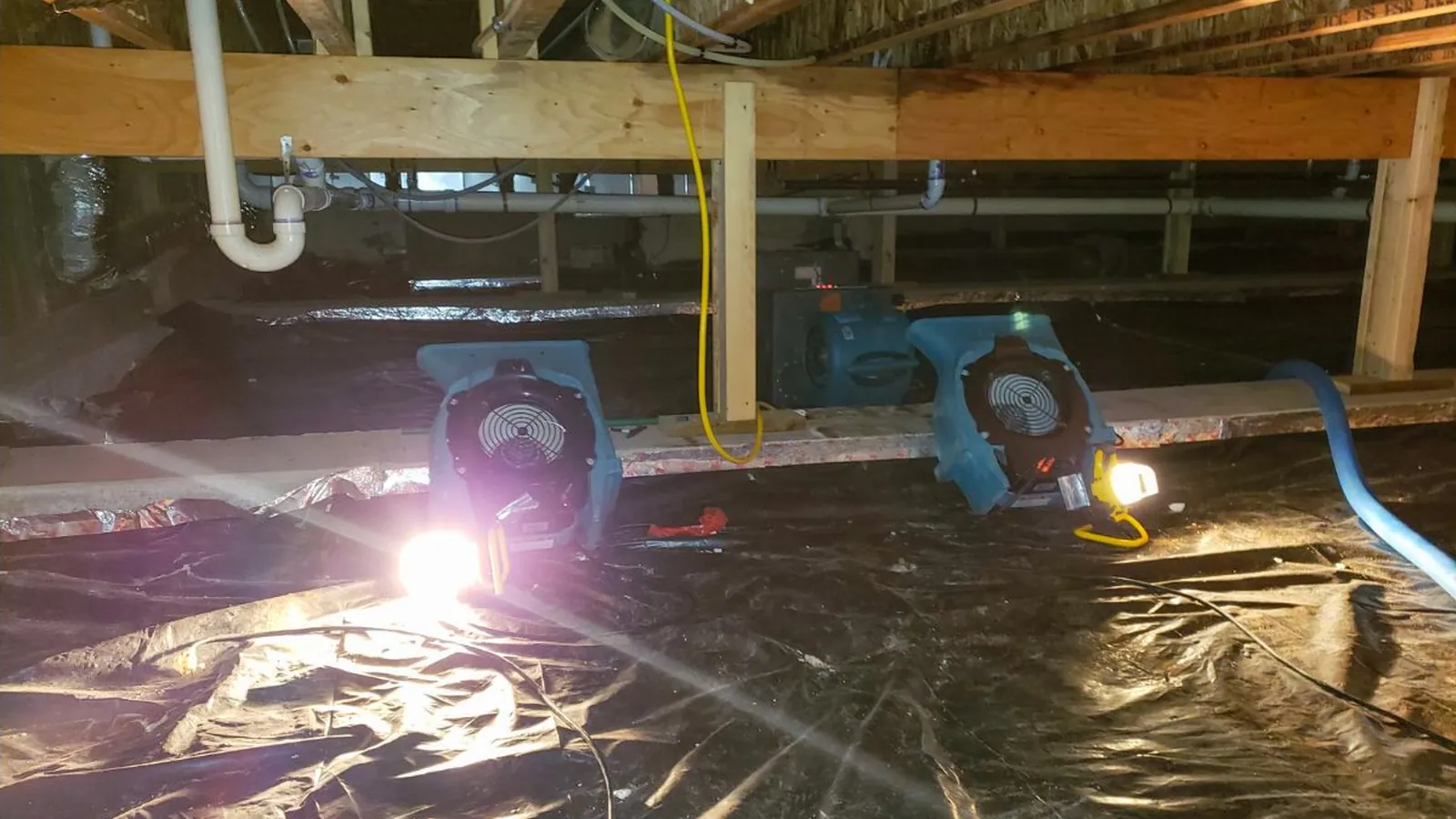
What water in a crawl space does
A crawl space is the shallow space under a floor, with joists above and bare soil or a slab below. Water gets in from plumbing leaks, rain, groundwater and poor drainage. Once it is there, it soaks insulation, raises humidity and sits against wood framing that you cannot easily see.
Because nobody looks in a crawl space often, problems run long. Callers usually find out from a musty smell inside the house, cold or soft floors, or a plumber who sees standing water on a routine visit. Dry the space promptly and the damage stays small. Leave it and the framing and subfloor stay damp.
- Musty or earthy odor coming from floor vents.
- Floors that feel soft, cold or bouncy over one area.
- Visible water, pooling or rust on pipes or ducts.
- Sagging or wet fiberglass insulation under the floor.
Crawl space in northern Illinois homes
Many northern Illinois homes sit over basements, and crawl spaces are less common here. They still show up under additions, some ranches and certain townhomes, so we cannot quote a local share. If your home has one, check it after heavy rain and after any plumbing work.
If the water rose from the ground after a storm, see flood damage cleanup for how contaminated water changes the job. If a supply line broke above the space, see burst pipe water damage. If the water came from groundwater, ask your insurer what your policy says, because groundwater is commonly excluded.
How we dry a crawl space
Access and safety
We check for electrical hazards, gas lines and wet wiring before anyone crawls in.
Extract and remove
Pumps clear standing water. Wet insulation and vapor barrier come out if soaked.
Dry
Air movers and dehumidifiers run until joists and subfloor read normal on moisture meters.
Control moisture
Barrier, drainage and vent conditions are reviewed to stop a repeat.
We are a restoration service, not a waterproofing contractor. Drying a crawl space and repairing damage is our work. Reshaping drainage or installing a sump system is a different trade, and a waterproofing contractor should assess it. This honest line matters, because drying alone does not stop new water from coming in.
Mold risk and next steps
Damp wood and insulation can support mold. We do not make health claims about it, and any health concern belongs to a physician. If you can already see growth on joists or the subfloor, our mold remediation page explains testing and removal under the ANSI/IICRC S520 standard.
Cost and insurance
Price depends on how much water, how long it sat, how much insulation and barrier is wet, how hard the space is to reach and how many days of drying are needed. Sudden plumbing leaks are often covered by homeowner policies, while groundwater and gradual seepage usually are not. Ask your insurer. Want your real number? Call (630) 580-6401.
Before you go into a wet crawl space
- Do not enter if there is standing water near wiring or an energized panel.
- Wear boots, gloves, a mask and knee protection.
- Look from the access hatch first with a bright flashlight.
- Do not disturb insulation or old duct wrap that looks stained.
- Call us for pumping and drying instead of crawling in alone.
Crawl spaces are cramped and dim, and a fall or a wiring contact turns a small leak into an injury. Our crews carry lights, protective gear and pumps for this reason.
Questions about crawl space water damage in Roselle
Look for a musty odor, soft or cold floors, visible water or damp insulation, and rust on pipes or ducts. A flashlight and a moisture meter reading help.
Usually not. Fiberglass that has been soaked tends to sag and hold moisture, so it is typically removed and replaced after the wood is dried.
No. We dry and repair water damage. A separate contractor assesses drainage, vapor barriers and sump systems.
If water is actively flowing, shut it off and call the line. A stable damp crawl space is urgent but not an hour-by-hour emergency, so call when you see it rather than waiting for the next storm.
Sudden plumbing leaks are often covered, while groundwater and seepage are commonly excluded. Ask your insurer and document the damage.
It depends on the amount of water and how much wood is wet. Moisture meter readings decide when the space is dry, not a calendar.