
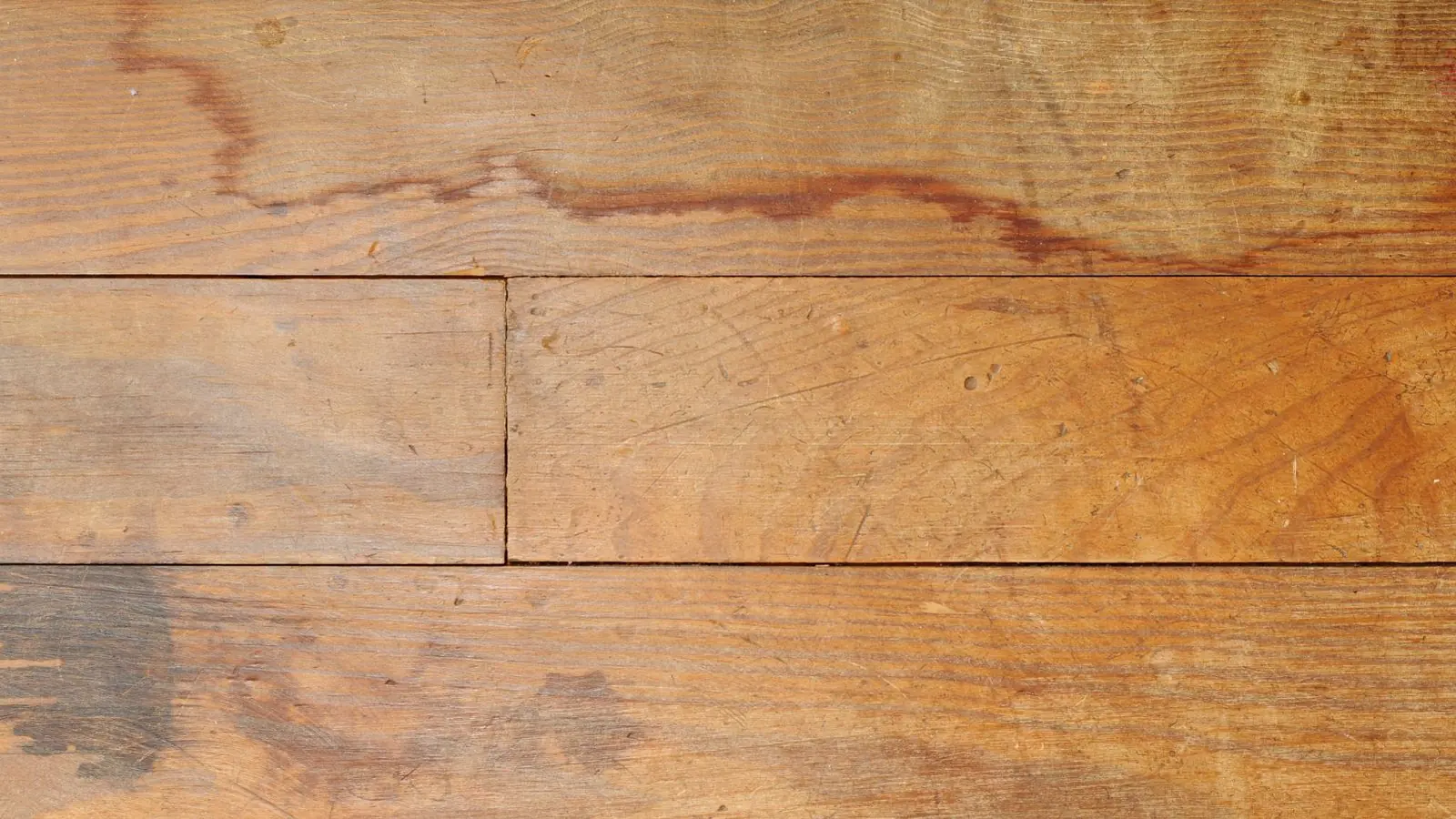
Cupping, crowning and buckling: what the floor is telling you
Wood absorbs water and swells. When the bottom of a board takes in more moisture than the top, the edges rise and the middle dips, which is called cupping. When the top is wetter, the center can rise into a crown. If the swelling is bad enough, boards lift off the subfloor and buckle.
People often describe a floor that was fine after a leak and then started cupping days or weeks later. That is normal. Moisture trapped under the boards works its way through slowly, so a floor that looks only slightly wet can keep changing until it is dried. A moisture meter, not the surface, tells you where the moisture is.
- Edges of boards rising into a shallow cup.
- Floor lifting or buckling away from the subfloor.
- Dark staining or black lines between boards.
- Musty smell along the baseboard.
Can the floor be saved?
Sometimes. If water was clean and was removed quickly, drying the floor in place can let boards settle back, though some cupping may remain until the floor is sanded. If water sat for days, or the source was contaminated, replacement is more likely. The deciding factor is moisture readings through the board and the subfloor.
| Floor type | Reaction to water | Likely outcome |
|---|---|---|
| Solid hardwood. | Cups, crowns and may buckle. | May dry in place if caught early, else replace. |
| Engineered wood. | Layers can delaminate and swell at edges. | Often replaced. |
| Laminate. | Swelling at seams that does not reverse. | Usually replaced. |
| Vinyl plank. | Holds water underneath. | Lift planks to dry the subfloor. |
Drying a wood floor uses air movers, dehumidifiers and sometimes mats or panels that draw moisture through the boards. Our structural drying page explains the equipment, and we check the subfloor too, since a dry top and a wet subfloor is a common trap.
What causes wood floor water damage
Common sources include an upstairs bathroom leak, a dishwasher or refrigerator line, a washing machine hose, a burst pipe, a pet accident that went unnoticed and groundwater coming up through a slab. A plumbing leak from above often arrives with a ceiling stain below, see ceiling water damage repair.
If a kitchen floor took the water, see kitchen water damage. For floors wet by flooding from outside, flood water is contaminated, which makes replacement of porous materials more likely.
Repair options and honest trade-offs
Drying plus sanding and refinishing can bring back a floor with mild cupping. A few damaged boards can be replaced and blended. A whole room that buckled is usually replaced. A cheaper repair that leaves moisture behind risks mold and renewed cupping, so we recommend replacing a floor only when readings and visible damage point that way.
Local context for Roselle homes
Many Roselle homes built during the 1960s and 1970s growth years have oak or similar strip flooring, often finished and sometimes covered with carpet. If you are not sure what is under your carpet after a leak, lifting a corner can show whether hardwood sits below. Ask Development and Engineering Services whether any structural repair needs a permit.
Cost factors and insurance
Price depends on the floor type, area, how long the floor was wet, the drying equipment needed and whether replacement and refinishing are required. Sudden leaks are often covered by homeowner policies while neglected leaks often are not. Ask your insurer. Want your real number? Call (630) 580-6401.
What to do before the boards move
- Lift rugs and furniture so air reaches the floor.
- Mop up surface water and keep wet items off the wood.
- Skip heaters and space heaters aimed at the floor.
- Leave windows and doors as they are until we advise.
- Photograph cupping or staining each day, since it can change.
The industry guide ANSI/IICRC S500 treats wood floors as slow, dense materials that need patient drying. A floor that looks flat today can cup next week if moisture is still in the subfloor.
Questions about hardwood floor water damage in Roselle
The bottom of the boards absorbed more moisture than the top. Cupping can continue for days until moisture is dried out.
Only after the floor is dry. Sanding wet boards can lock in problems, so moisture readings come first.
It depends on the species, thickness and how much water it absorbed. Readings decide, not a fixed number of days.
Usually not. Laminate swells at the seams and does not return to its shape, so it is commonly replaced.
Do not force it. Photograph the damage first for insurance, and have the moisture checked so you know whether the subfloor is wet.
Sudden leaks are often covered, while slow leaks and maintenance issues often are not. Ask your insurer before any repair work.