
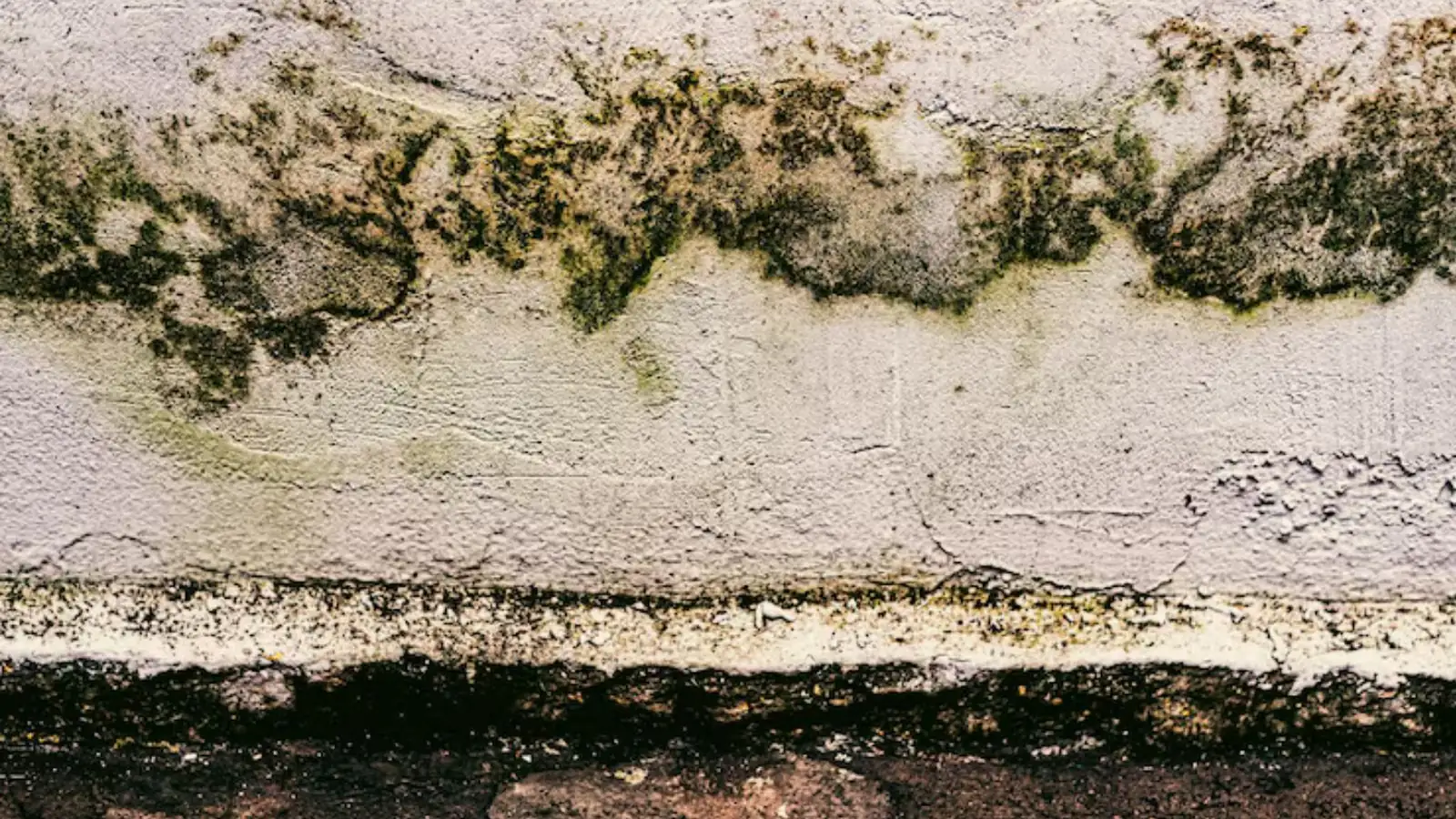
Black spots, musty smell, bathroom corner: what you are seeing
Most mold calls begin with a plain description. Spots on a closet wall, a smell under the basement stairs or dark growth in a shower corner are typical. So is a stain on a basement ceiling under an upstairs toilet. Mold is a moisture problem, and the spots are the visible result. If you fix the leak and dry the area, mold has nothing to grow on.
Those spots can also be mildew, dirt or staining that is not mold at all, and only testing or a trained eye can sort that out. We do not make health claims about mold, and any health concern belongs to a physician. What we can say is that growth means water has been present long enough to matter.
- Visible spots on walls, ceilings, carpet or baseboards.
- A musty or earthy smell that does not clear.
- A recent leak from a roof, toilet, sink, tub or AC drain line.
- Water stains that dried but left discoloration.
Why water damage comes first
Mold questions often start with a recent leak from a toilet, a sink, an AC condensate line, a roof or siding. That link is the point. The leak has to be found and fixed, or any cleanup will fail when the area gets wet again. Drying is part of the job, see structural drying, and so is repair of the source by a plumber, roofer or HVAC technician.
We never promise that mold stays away for good. What we do is remove affected materials, clean surfaces, dry the area and tell you what moisture condition would cause a repeat.
How remediation works
Assess
Moisture meters and a visual inspection find the extent of growth and the moisture source.
Contain
Plastic barriers and negative air control keep spores from spreading during work.
Remove
Affected porous materials such as drywall, insulation and carpet are removed and bagged.
Clean
Surfaces that stay are cleaned with HEPA vacuuming and approved methods.
Dry and repair
Air movers and dehumidifiers dry the area, then materials are replaced.
ANSI/IICRC S520 is the published standard for professional mold remediation. It is a reasonable question to ask any company whether its crews follow it. The method varies with the size of the area, the material and whether the building is occupied.
Testing, clearance and home sales or loans
Testing can mean air or surface sampling by an independent mold assessor, and clearance testing after remediation checks that the work succeeded. Some home buyers and lenders ask for it and a lender may want mold addressed before it funds a loan. Whether a lender accepts any result is its decision, so we cannot promise that.
An independent assessor, rather than the remediation company, avoids a conflict of interest when you need a clearance result for a sale. For wet carpet that turned up spots, see carpet water damage restoration.
Illinois rules and what to ask
Illinois passed the Mold Remediation Registration Act, but the Illinois Department of Public Health says that until its rules are adopted, mold remediators are not required to register. The department has not said when rules will be adopted. So today the practical step is to ask any contractor about its training, process and insurance, and check with the department.
You can contact the Illinois Department of Public Health at dph.tox@illinois.gov with questions. This site does not cite a license number or registration for any contractor, since none applies yet.
Cost factors and insurance
Price depends on the area and materials affected, access, containment needs, testing, and the drying and rebuild that follow. Insurance coverage for mold depends heavily on the policy and the cause, and often follows whether the water damage itself was covered. Ask your insurer. Want your real number? Call (630) 580-6401.
What to do before you call about mold
- Stop the water source and fix the leak if it is active.
- Photograph the area without scraping or disturbing it.
- Keep fans and air returns away from the affected spot.
- Do not use paint or sealer to cover growth.
- Keep a note of when the leak happened and what got wet.
Disturbing growth can spread spores, which is why a calm look comes first. We make no health claims, and a physician is the right contact if anyone feels unwell.
Questions about mold remediation in Roselle
Not always. Dirt, mildew and staining can look similar. A visual inspection, moisture reading and sometimes sampling can tell, and a physician handles any health concern.
Clearance testing is best done by an independent assessor, so the result does not come from the company that did the work. Ask when you call and we will explain how it fits the job.
That is the lender and underwriter decision. We cannot promise acceptance, and an independent clearance report may be the document they ask for.
The Mold Remediation Registration Act exists, but the Illinois Department of Public Health says registration is not yet required while rules are pending. Ask any contractor about training and process, and contact IDPH with questions.
Small, surface-level spots on non-porous material are a household cleaning job for some people. Larger areas, porous material or growth inside walls should be assessed first, since disturbing mold can spread spores.
Fix the moisture source and dry the area. No contractor can honestly promise mold will never return if moisture comes back.