
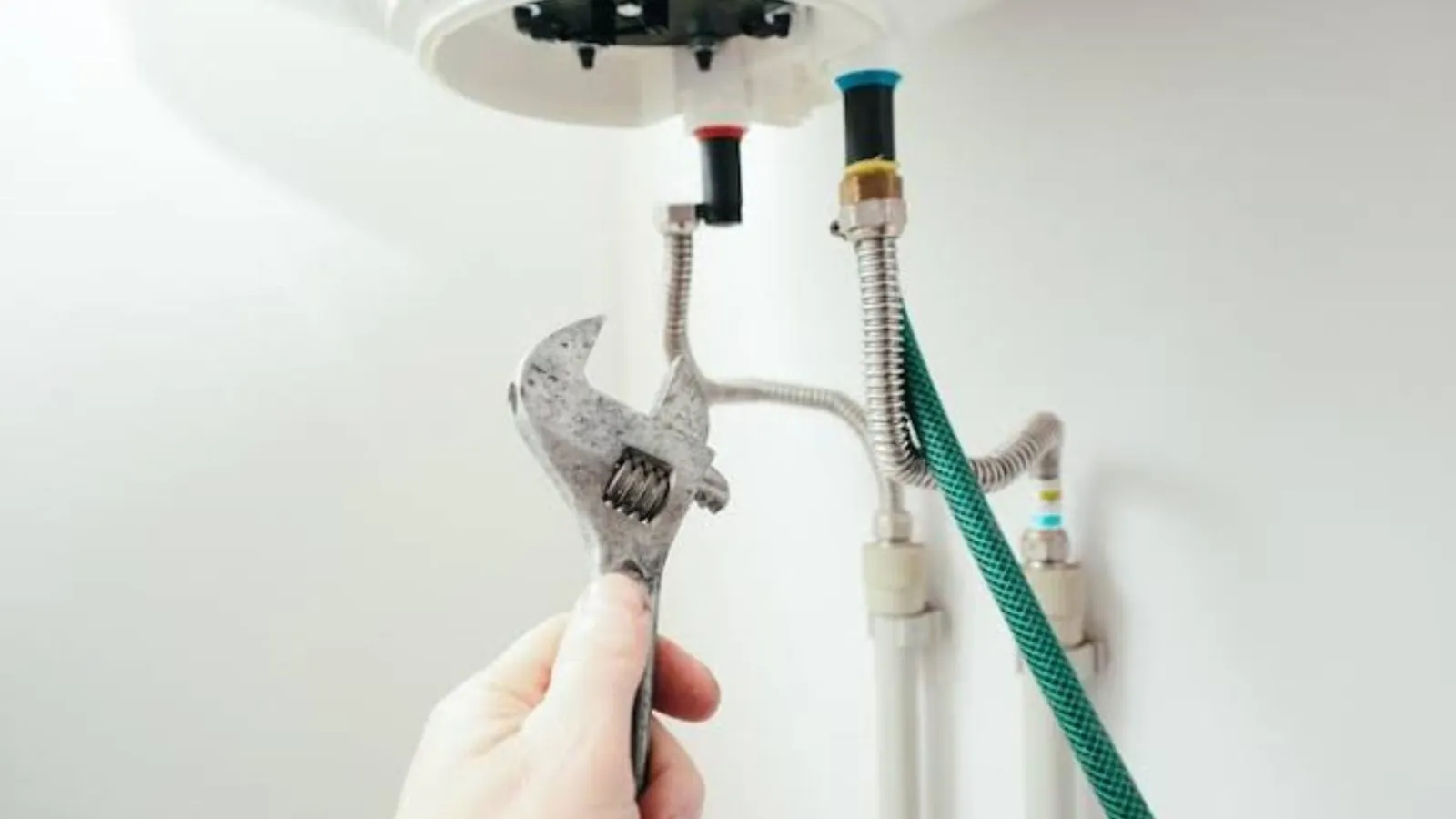
Water heater leaking: the first five minutes
A water heater leak is urgent because a tank is a reservoir that keeps refilling from the supply line. Our line is open 24/7. Close the cold water valve above the heater first, which stops new water from entering the tank. Then turn off the heat source: set a gas unit to pilot or off, or switch off the breaker for an electric unit.
Keep out of any pooled water near the unit if the heater is plugged in or wired close to the floor. Hot water can scald, and a leaking tank may still be warm. Open a hot faucet upstairs to relieve pressure if the tank is draining, move stored items away from the water, and photograph the unit and the floor.
- Close the cold supply valve on top of the heater.
- Switch off the breaker, or turn a gas valve to off or pilot.
- Do not touch a plugged-in unit while standing in water.
- Shut the main if you cannot find or close the heater valve.
Why tank leaks are bigger than they look
Residential tanks commonly hold around 40 to 50 gallons, and a tank that fails at the bottom can release most of it at once. A slow weep at a fitting is a smaller problem, but it can run for weeks behind a wall or stored boxes. The two cases look different on the floor and in the damage map.
| Leak type | What you see | What happens next |
|---|---|---|
| Fitting or valve drip. | Damp spot, rust streak, small puddle. | A plumber replaces the part. We dry the floor and wall base. |
| Relief valve discharge. | Water near the discharge pipe. | A plumber checks pressure and the valve. We dry the area. |
| Tank failure. | Steady water from the base or tank seam. | The heater is replaced. We extract and dry the whole area. |
Water from a heater is usually clean at first, which makes it Category 1 under the ANSI/IICRC S500 standard. That category slips as water sits on dirty floors, so extraction should start quickly. See water extraction for the pumping side of the job.
Where water heaters sit and what gets wet
Heaters stand in basements, utility rooms, garages, closets and attics. In a basement, water heads for the floor drain or the lowest spot and can reach a finished area next door. In a closet or utility room, water goes under flooring and into wall bases. In an attic or upper floor, it comes through the ceiling below.
A heater near a laundry area or in a finished basement can let a failure reach carpet, drywall and stored belongings together. For below-grade drying, see basement water damage cleanup. If the leak traveled through a ceiling, see ceiling water damage repair.
Replacing the heater and permits
Replacing a water heater is a plumber or licensed installer job. The Village of Roselle lists water heater replacement among the work that needs a building permit, handled through Development and Engineering Services. Ask your installer whether they pull it, and keep the receipt for your insurer.
Do the cleanup before the new unit goes in if you can. Drying the floor and wall base first keeps moisture from hiding behind a fresh install, and moisture readings tell you when it is safe to close things up.
Cost factors and insurance
Price depends on how much water escaped, how long it ran, what the floor and walls are made of and how many days of drying are needed. Sudden tank failure is often covered by homeowner policies, though wear and tear on the heater itself usually is not. Check your policy and ask your insurer. Want your real number? Call (630) 580-6401.
Questions about water heater leak cleanup in Roselle
Yes. A failing tank can empty onto the floor at any hour, so the line is open all night. We will tell you what to shut off while you wait.
No. A plumber or licensed installer replaces it. We extract the water, dry the area and repair what the water damaged.
Not while standing in water if the unit is electric or plugged in. Turn off power or gas first, and wait for the water to cool before handling parts.
Find the cold water supply pipe entering the top of the tank and turn the valve clockwise. If it will not close, shut the main water valve instead.
Mold needs moisture, and a constantly damp floor or wall base can support growth. Dry the area quickly and see our mold remediation page if you notice musty odors or spots.
Often for the water damage from a sudden failure, though not usually for the heater itself. Ask your insurer and keep photos and receipts.