
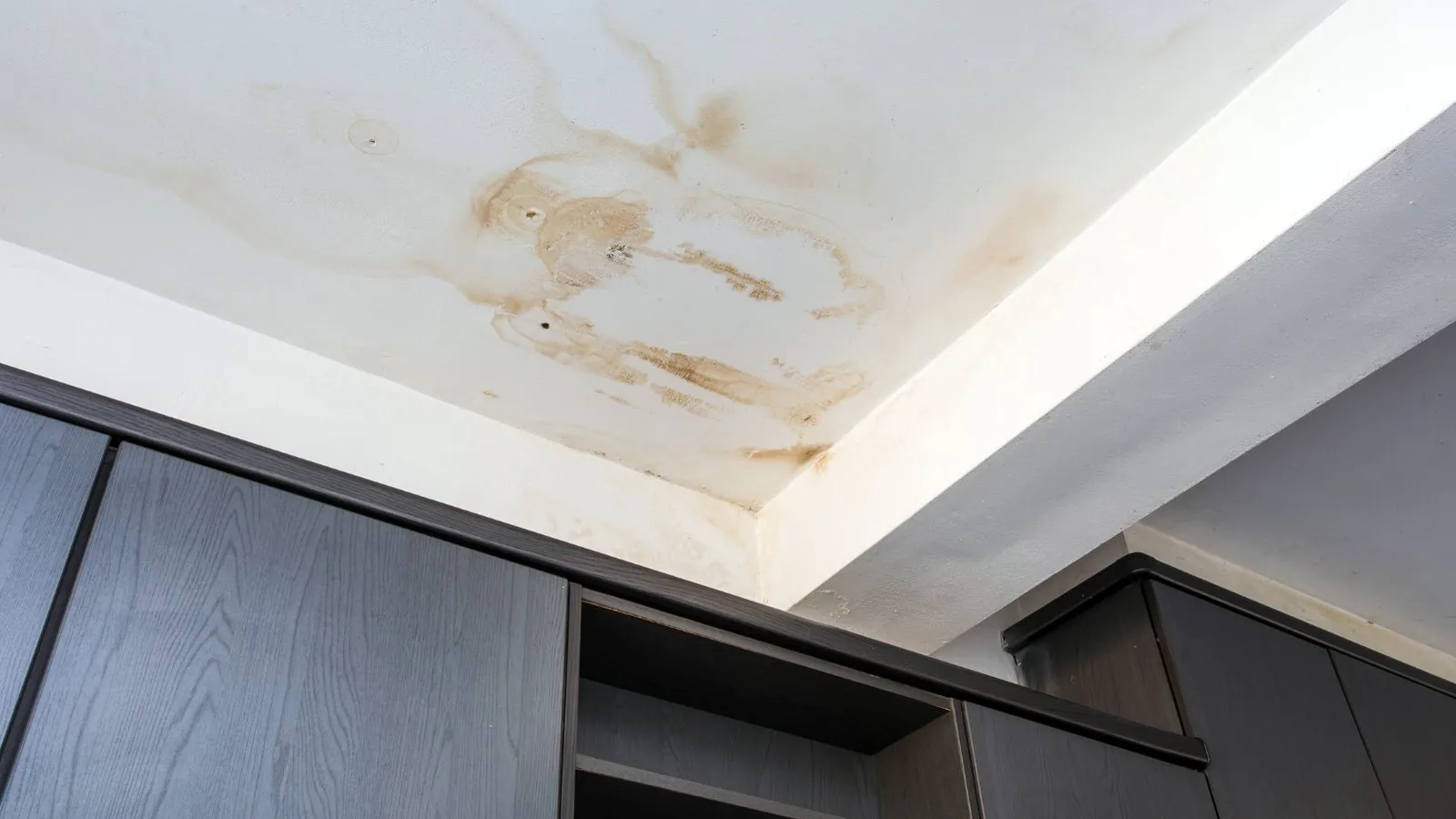
Why a walkthrough is not enough
Sellers repaint, replace carpet and clean before a showing, and that is normal. It also means old water damage can look like nothing at all. A fresh coat of paint on a ceiling or a new baseboard at one wall is not proof of a problem, but it is a reason to look closer. The goal of this guide is to help you decide where closer looks pay off.
We are a restoration company, not a home inspector, and nothing here replaces a licensed inspection. What we can offer is a practical view of how water leaves traces and what to do if you find them.
What to look for inside
- Stains on ceilings or walls, especially rings that look layered.
- Fresh paint in one spot while the rest is old.
- Baseboards that are swollen, warped or newly replaced.
- Soft or bouncy floors near bathrooms, kitchens and laundry.
- A musty smell in closets, basements or under stairs.
- Cupped or buckled hardwood, or peeling laminate seams.
- Rust on a water heater base or on pipe joints.
Press gently on suspicious spots. Drywall that feels soft or crumbles means it has been wet. Pull out a drawer under the sink and look for water rings. Open cabinet doors under bathrooms and check the back wall.
What to check in the basement and utility areas
Look at the base of the walls for staining, paint peeling or white mineral residue called efflorescence. Check the sump pit, if there is one, and ask whether the pump has been replaced. Test the floor drain by running water. Look for signs that stored items were once raised off the floor.
See what is around the water heater, the washer and the furnace. Old stains near these appliances tell a story. Our pages on water heater leak cleanup and basement water damage cleanup explain what these losses look like.
Outside the house
Walk the exterior. Look for downspouts that empty near the foundation, soil that slopes toward the house, cracked or patched foundation and staining on siding. Look at the roof line for sagging gutters, lifted shingles and fresh patches. Rain is the main outside threat, and what the property does with it tells you a lot.
Questions to ask the seller and the agent
- Has the home ever had a leak, flood or sewer backup?
- Were any insurance claims filed for water damage?
- What repairs were done, by whom and when?
- Can you share receipts, permits and warranties?
- Has the sump pump or water heater been replaced?
- Are there any areas where the paint is newer than the rest?
Illinois sellers generally complete a disclosure about known conditions. Read it carefully, and ask your agent or attorney about any answers that seem vague. We cannot give legal advice, and a real estate attorney can.
Bring in a moisture check when something looks off
A moisture meter and a thermal camera can find wet areas that a visual walkthrough misses. If you find a stain or a smell, ask for a moisture reading before closing. A dry reading with a clear repair record is reassuring. A high reading is information you can use in negotiation.
If mold may be involved, an independent assessor, rather than a company that would do the removal, can advise on testing. See mold remediation for how testing and clearance work. We make no health claims about mold.
What a past leak means for the price
Past water damage is not always a reason to walk away. A single, repaired leak with good records is different from an ongoing problem. What matters is whether the source was fixed, the area was dried and the damaged materials were replaced. Ask contractors for written scopes and prices for anything you find, so negotiations are based on numbers.
Buyers in Itasca and Bloomingdale ask the same questions, and a moisture check helps in any village.
Ask the village what has been permitted
Roselle Development and Engineering Services handles permits for plumbing, electrical, water heater replacement, roof replacement and similar work. If a seller says a water heater or a roof was replaced, you can ask the village whether a permit exists.
Also check FEMA flood maps for the address, since Roselle is covered in the DuPage flood insurance study. The Illinois Department of Insurance notes that standard homeowners policies generally exclude flood.
Source types: Village of Roselle, FEMA, Illinois Department of Insurance
Questions Roselle homeowners ask
Not always. Inspectors check visible conditions and may use meters, but hidden moisture can escape a standard inspection. Ask what tools they use.
Yes. Read the disclosure carefully and ask follow-up questions about repairs, dates and receipts.
Ask for proof of the repair and the date. A moisture reading shows whether the area is dry now.
Not by itself. Ask about past water, check the sump pump and look at the base of walls for staining or soft drywall.
It depends on what you find. If you suspect a past leak, ask an independent assessor, not a remediation company, to advise.
Negotiation is between you, the seller and your agent. Written estimates from qualified contractors help your case.