
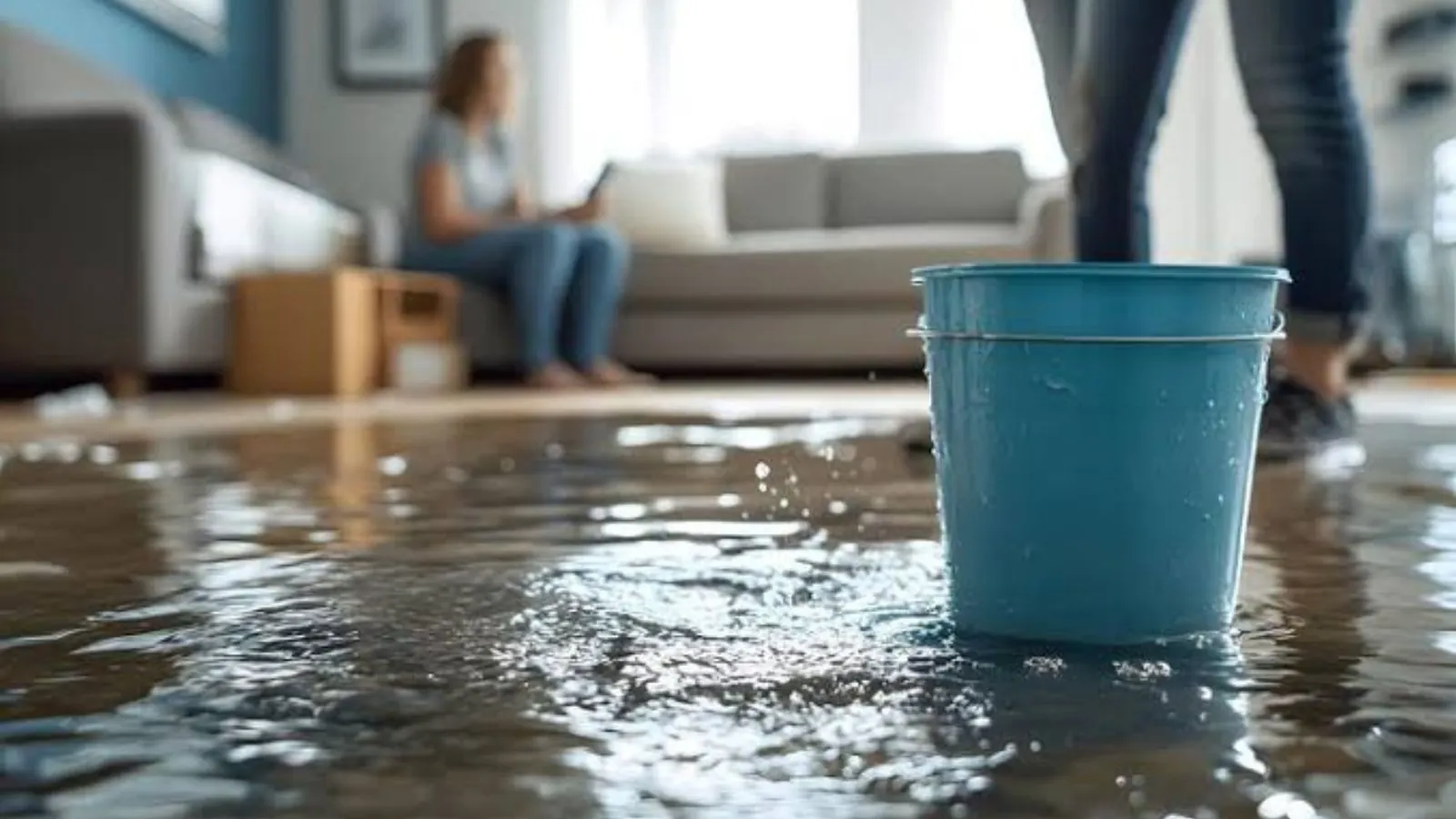
Start with what you can safely do
Small water events happen in every house. A pot overflows, a toilet supply line drips for ten minutes, or a window leaks during a storm. For a small, clean-water spill on a hard floor, the right response is quick and cheap. Mop, towel dry and run a fan. The trouble starts when people use that same approach on a wet wall or a soaked carpet.
Here is a simple test. If water touched only a hard surface and you can reach all of it, DIY may be fine. If water got under carpet, behind baseboards, into drywall or into a ceiling, a surface mop does not solve the real problem.
The safe first steps
- Stop the source by closing the fixture valve or the main.
- Turn off power to wet areas only if you can reach the panel dry.
- Wear rubber boots and gloves in standing water.
- Move rugs, furniture and electronics to a dry area.
- Soak up water with towels and a wet-dry vacuum.
- Open windows for air if weather allows.
Take photos before you change anything. Your insurer will want to see the original loss, and photos also help us understand the scope when you call. Our water extraction page explains what professional removal adds beyond these steps.
Mistakes that make things worse
Using a household vacuum
Water and a standard vacuum can cause shock and ruin the motor. Use a wet-dry vacuum.
Turning the heat way up
High heat can push moisture into walls and damage wood floors. Keep a normal temperature and add airflow.
Leaving wet carpet in place
Moisture sinks into the pad and subfloor. Lift what you can and dry the layers underneath.
Painting or sealing too soon
Paint hides a stain but traps moisture. Dry the wall first.
Going into water near energized power
Stay out and call your electric utility if the panel is wet.
Where DIY stops
Call a professional if water has been present longer than a day or two, if more than one room is wet, if the water was dirty, if walls or ceilings are soaked or if you can smell mold. Those situations involve hidden moisture, and a surface cleanup will not find it. Professionals use moisture meters and thermal cameras to map the wet areas, then dry them with air movers and dehumidifiers.
| Situation | DIY reasonable? | Better move |
|---|---|---|
| Small clean spill on tile. | Yes. | Mop and dry. |
| Wet carpet from a small leak. | Maybe, if caught within hours. | Lift and dry, consider a pro. |
| Water inside a wall. | No. | Moisture mapping, see wall and drywall repair. |
| Sewage or flood water. | No. | Stay out and call, see sewage backup cleanup. |
| Ceiling stain with sag. | No. | Call right away, see ceiling water damage repair. |
The hidden problem: moisture you cannot see
The reason a quick cleanup fails is not the visible water. It is the moisture inside materials. Drywall can wick water upward, subfloors hold it for days and insulation can stay wet for weeks. Left alone, that moisture can lead to odor, warping and mold. For a deeper look at drying, see structural drying and dehumidification.
Industry guidance is written down in ANSI/IICRC S500, the published standard for water damage restoration. It treats clean water from a supply line differently from drain water or flood water, and it is a good reason to be careful with anything that is not clean.
Equipment: what is worth renting and what is not
A wet-dry vacuum, a few box fans and a basic moisture meter are reasonable for a small loss. A dehumidifier sized for the room can help in a basement. Commercial air movers and low-grain refrigerant dehumidifiers are more effective for large losses, and we do not offer rentals. If you rent anything, check the readings after a day and keep checking until walls and floors match dry areas.
Two households with the same leak can end up with very different outcomes, because one acted quickly and the other waited. We see that pattern from Schaumburg to Streamwood.
Know your shutoff before you need it
Roselle receives Lake Michigan water through the DuPage Water Commission, and the Village distributes it. Inside your house, the main shutoff is the one valve that matters most. Find it today, label it and make sure everyone at home can reach it.
If the leak is on the street side of the meter, call Village Public Works at 474 Congress Circle North. Roselle also sends Village notices through Nixle alerts, which are worth signing up for.
Source types: Village of Roselle, DuPage Water Commission
Questions Roselle homeowners ask
No. Standard vacuums are not made for water and can shock you. Use a wet-dry vacuum plugged into a safe outlet.
Bleach alone does not fix the moisture that feeds mold. Dry the area first, and have growth assessed if it keeps returning.
The sooner the better. Many materials begin to degrade within a day or two, so do not wait to see whether it dries.
A fan helps surface air but does not pull moisture from walls and subfloors. Meters tell you what is still wet.
Not before photographing it for your insurer. Soaked or contaminated drywall is usually removed, but ask first.
Rental drying equipment exists at some stores, and we do not offer rentals. If you rent, use a moisture meter to confirm the result.