
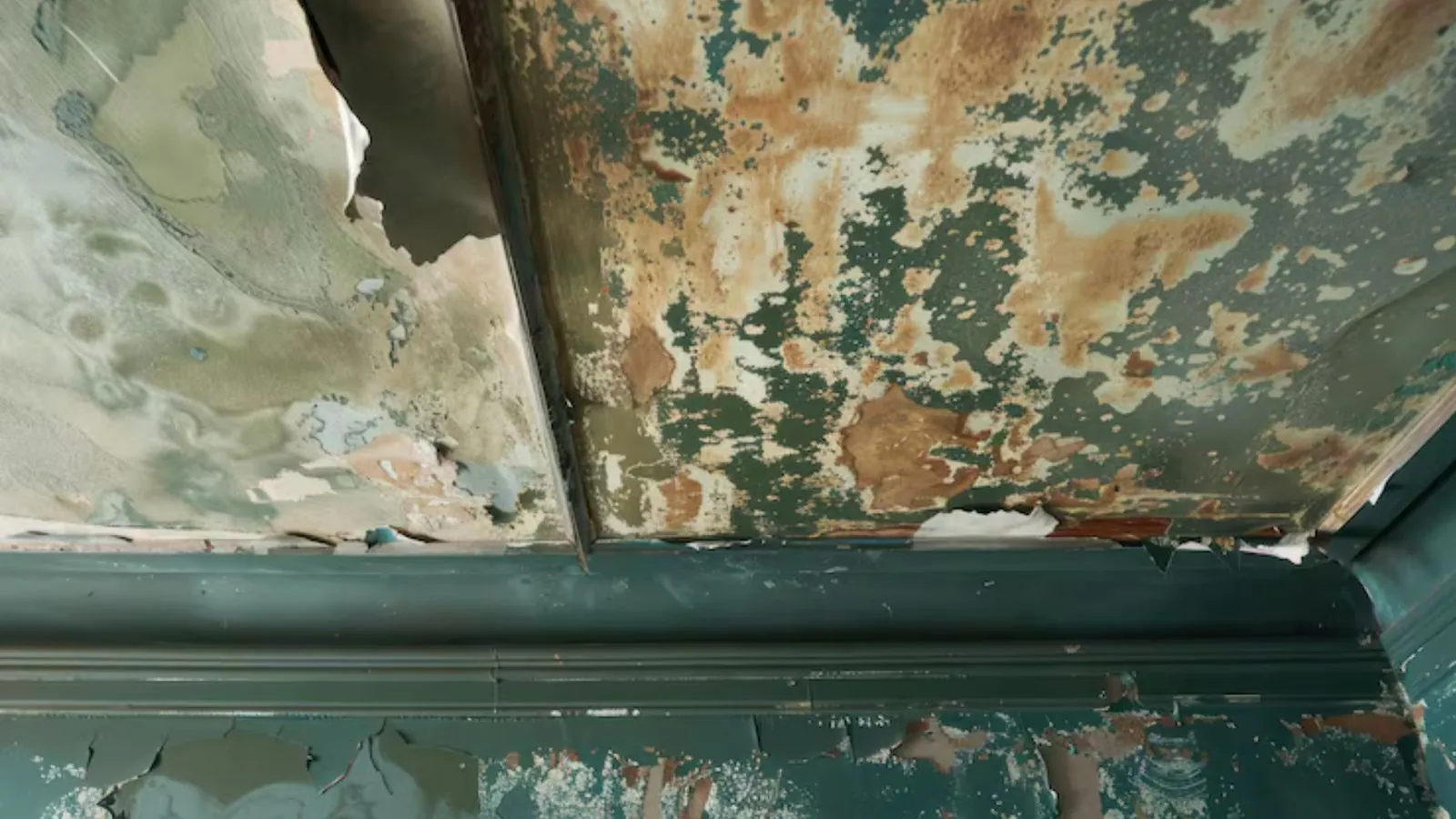
You found it. Now what?
Most people find mold by accident. A box in the basement is damp, the wall behind a sink looks dark or a closet smells like wet earth. The first reaction is often panic or a trip to the hardware store, and neither is the best move. A calm look at the situation gets you further.
Begin by asking two questions. Where did the water come from, and is it still there? If a leak is still active, mold will keep growing and any cleanup will be temporary.
What to do and what to leave alone
- Stop the water source if it is still active.
- Take photos of the area and the surrounding materials.
- Keep fans off the affected area until it is assessed, since airflow can spread spores.
- Do not cut into drywall or tear out carpet yourself.
- Do not use paint or sealer to cover growth.
- Keep children and pets away from the area while you plan.
Small, isolated spots on tile, glass or other hard surfaces can usually be cleaned with household methods. Larger areas, porous material such as drywall or carpet, or growth that appears inside walls call for a closer look. We do not make health claims, and a physician is the right person to ask about symptoms.
How removal is scoped
A removal scope lists what will be cut out, what will be cleaned, how the area will be contained, how it will be dried and what will be rebuilt. Without that list, a price is hard to compare. Ask for it in writing.
| Material | Typical approach | Reason |
|---|---|---|
| Drywall with growth. | Cut out and replace. | Porous, holds growth. |
| Wood framing. | Clean and dry. | Structural, can usually be cleaned. |
| Carpet and pad. | Remove. | Hard to clean thoroughly. |
| Tile and glass. | Clean. | Non-porous. |
| Insulation. | Remove if wet or affected. | Holds moisture. |
This follows the general logic of ANSI/IICRC S520, the published mold remediation standard. The exact approach depends on the case.
Why the water source decides everything
A roof leak, a bath fan venting into an attic, a dripping supply line and a clogged AC drain line all feed mold in different ways. Fixing the source is the part of the job a restoration company usually cannot do alone, so expect to involve a roofer, plumber or HVAC technician. See AC leak water damage for condensate line problems and ceiling water damage repair for overhead leaks.
Drying is the other half of the answer. After material is removed, structural drying brings the area to a normal moisture level, which is what keeps growth from returning.
Selling or refinancing with mold in the picture
A buyer or lender may ask for proof that mold was handled. A written scope, photos, drying records and an independent clearance report can all help. Whether a lender accepts any of it is the lender decision, and we cannot promise an outcome. If you are buying, a thorough water damage check before closing can help you avoid surprises.
Homeowners in Itasca and Schaumburg ask about this when a sale is close. Start early, because testing and drying take time.
Questions to ask any contractor
- What is your written scope and price?
- Which standard do your crews follow?
- How will you contain the work?
- Who handles testing and clearance?
- What do you expect to do about the moisture source?
- What does your insurance cover?
Illinois does not currently require mold remediators to register, per the Illinois Department of Public Health, so these questions matter more than a license number would.
A word on prevention
Mold removal works best when it is paired with a plan to keep moisture out. Run bath fans during and after showers, vent the dryer outside, fix gutters and downspouts, and keep the basement at a moderate humidity. Check under sinks and around the water heater a few times a year. None of this guarantees a mold-free home, but it removes the conditions growth needs.
Moisture sources worth checking in Roselle homes
Roselle grew from 6,207 residents in 1970 to 17,034 in 1980, and homes from that period are now decades old. Older bath fans, aging supply lines and worn roof flashing are common moisture sources in any house of that age. We cannot say which one affects yours, but checking them is a sensible first step.
If you need work that involves plumbing, electrical or a roof, ask Roselle Development and Engineering Services whether a permit applies.
Source types: U.S. Census population counts, Village of Roselle
Questions Roselle homeowners ask
Small surface spots on hard material may be cleaned, but scrubbing larger or porous areas can spread spores. Assess first.
We make no health claims about mold types. A physician can answer health questions, and the building process is the same.
That depends on the size and location of the work. Containment helps, and we explain access before work starts.
It often depends on the cause of the water and the policy wording. Ask your insurer early.
Call an HVAC technician as well. Ducts can spread growth, and the moisture source must be fixed.
It depends on the area, the materials and the drying. A written scope should give you an expected timeline.