
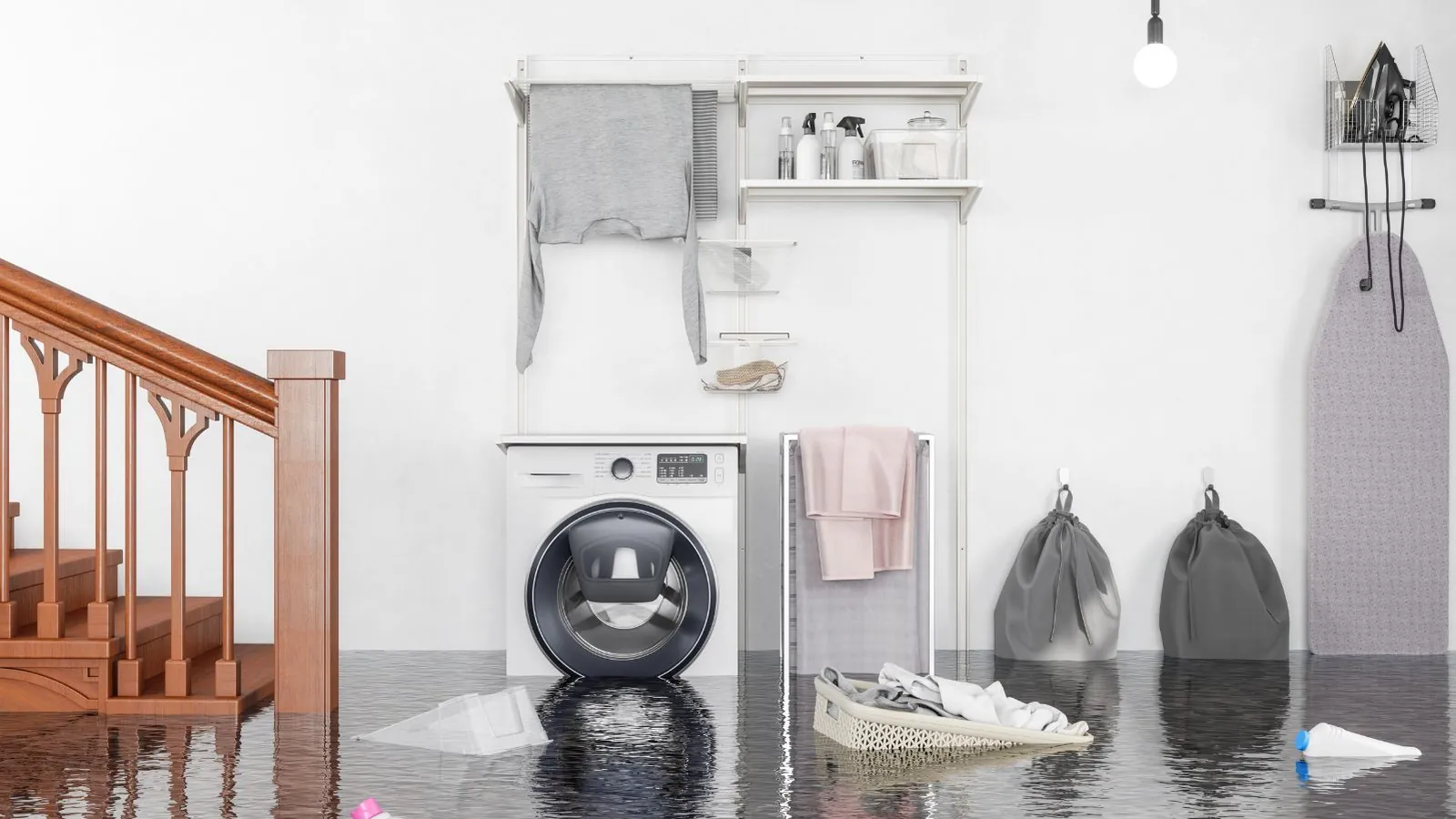
Where Waterbury sits in Roselle
Waterbury lies on the west side of Roselle, north of Lake Street and west of Roselle Road, around Rodenburg Road. Real estate listings describe it as a mix of townhouses and single-family homes, with construction dating from the mid-1970s and some later building. Waterbury Elementary School, part of Keeneyville School District 20, and Waterbury Park on Rodenburg Road give the name its local recognition.
Water damage here does not need a storm. A failed supply line, a leaking water heater, a dishwasher hose or a roof leak can start the same kind of job. Neighborhood-specific FEMA flood-zone status is not verified, and nothing we found documents repeated flooding in Waterbury, so check the FEMA Flood Map Service Center for your own address.
When one unit's leak becomes a shared problem
In a townhome or condo, water does not stop at the property line you pay for. It can follow a wall cavity, a ceiling or a floor assembly into a neighboring unit. That makes a quick shutoff and clear communication as important as the cleanup itself.
If you share walls, tell your neighbors and your association or property manager early. A wet ceiling below a leaking bathroom is a common way one small leak becomes two claims. Photograph the source and each affected room before anything is moved.
Start with the shutoff
Close the valve at the fixture, then the unit shutoff. If neither works, ask your association where the building shutoff is.
Ask who covers what
Associations and owners often divide coverage differently. Read your governing documents and call both your association and your insurer before repairs.
Keep a record
Dated photos, moisture readings and written scope notes help everyone describe what happened and what work was done.
Water coming through a wall or ceiling? Call now and we will talk through the next step.
Call (630) 580-6401First response in a Waterbury home
Stop the source
Close the nearest valve if you can reach it dry. Leave the main shutoff to someone who knows where it is and can reach it safely.
Mind the power
Keep people and pets out of standing water that touches outlets, appliances or cords. Never flip a breaker while standing in water.
Protect belongings
Lift small items, papers and electronics onto dry surfaces only where that is safe to do.
Call and document
Photograph visible damage when it is safe, then call (630) 580-6401 to talk through the next step.
How extraction and drying work in attached homes
Standing water comes out first, using pumps or extraction units. Wet carpet pad, insulation and soaked drywall are assessed next, because materials that stay wet can hold moisture long after the surface feels dry.
Drying then relies on air movers and dehumidifiers, with moisture meters used to check walls, floors and framing. In a shared building, equipment placement and noise matter, so ask how drying will be set up around your neighbors. Not every material can be saved, and that call has to be made on site. The industry standard ANSI/IICRC S500 sorts water into clean, gray and black categories, and the category drives what gets removed. What to do before we arrive is simple: stop the source if safe, keep clear of wet electrical items and take photos.
| Where water starts | What gets checked | Why it matters here |
|---|---|---|
| Supply line or hose. | Cabinet bases, flooring and the wall behind. | A slow leak can sit behind finished surfaces. |
| Water heater. | Floor, drywall base and nearby carpet. | A tank leak can spread into the next room. |
| Roof or ceiling leak. | Ceiling, insulation and walls below. | Water can travel before a stain appears. |
| Neighbor unit. | Shared wall and ceiling surfaces. | Your association can help sort out the source. |
Checks worth making before repairs begin
- Ask your association who must be told about a leak.
- Ask the Village building department whether repairs need a permit.
- Keep receipts, photos and moisture readings in one place.
- Ask any company to explain its drying plan and how it will measure progress.
- Call your insurer about coverage, which depends on the cause and the policy terms.
The Village of Roselle also runs a cost-sharing Yard Flooding Assistance Program for property owners with yard drainage problems, subject to available funding. Contact the Village Development and Engineering Services Department if water collects outside your building. For the work itself, see emergency water extraction, structural drying, water heater leak cleanup and ceiling water damage repair, or return to water damage restoration in Roselle.
Questions from Waterbury homeowners
That depends on the source, your governing documents and both insurance policies. Photograph the damage, tell your association and your insurer, and ask in writing who is responsible before repairs begin. We can help dry and document your own unit while that is sorted out.
We have not verified that. Flood zones are mapped by area rather than by neighborhood name, so look up your own address on the FEMA Flood Map Service Center. Water damage also happens outside mapped flood areas, since most of it starts with plumbing, appliances or roofs.
A small, clean spill on a hard surface may be fine with towels and airflow. If water reached walls, carpet pad or insulation, or the area stays damp after a day, hidden moisture is likely, so call a professional. Never use household fans or an ordinary vacuum on sewage or contaminated water.
Photograph the source, each wet surface and damaged belongings before they are moved, when it is safe. Moisture readings and an itemized scope of work can also help describe the loss. Coverage depends on the cause and your policy terms, so ask your insurer directly.
Call (630) 580-6401 with your street and the type of damage, and we will confirm whether we can help at your address. Waterbury is part of Roselle, so it sits inside the area this site serves.